Water Damage Restoration in
Barre, VT
Water Damage Restoration in Barre, Vermont is an emergency — and speed decides how much you save. One call routes you to a vetted, IICRC-standard local crew serving Barre — 24/7 emergency mitigation and full property recovery.
Where do these Barre numbers come from? Federal sources: Census geography released 2023, plus dwelling and household figures averaged over the five years ending 2022. Mileage is direct, not driving.
Why does every hour of delay cost more?
Water damage restoration in Barre, VT is the professional process of extracting water, drying the structure to a documented moisture standard, and repairing the damage — emergency extraction, structural drying with commercial air movers and dehumidifiers, and full repair. Responding fast is the single biggest factor in how much of the property is saved.
- 0–60 MIN
Clock starts now
Insurers expect mitigation to begin the same day a loss is reported.
- 1–24 HRS
Documentation matters
An adjuster will look for photos showing how fast drying began.
- 24–48 HRS
Claim scrutiny rises
A policy may flag delayed mitigation as a coverage issue once growth appears.
- 2–7 DAYS
Coverage dispute risk
Insurers can deny secondary damage tied to a slow response.
- 1 WEEK+
Claim complications
A week-old loss invites disputes over what the policy will still cover.
When should you call a crew in Barre?
What does water damage restoration in Barre involve?
- Load calculation sizing dehumidification capacity to the affected volume and water class
- Placement of axial and centrifugal air movers across wet surfaces and cavities
- Low-grain refrigerant or desiccant dehumidification to hold the target grain depression
- Cavity injection drying for wall and subfloor spaces trapping moisture
- Daily equipment monitoring and adjustment as the drying chart plateaus or progresses
- HEPA filtration where the water class requires airborne contaminant control
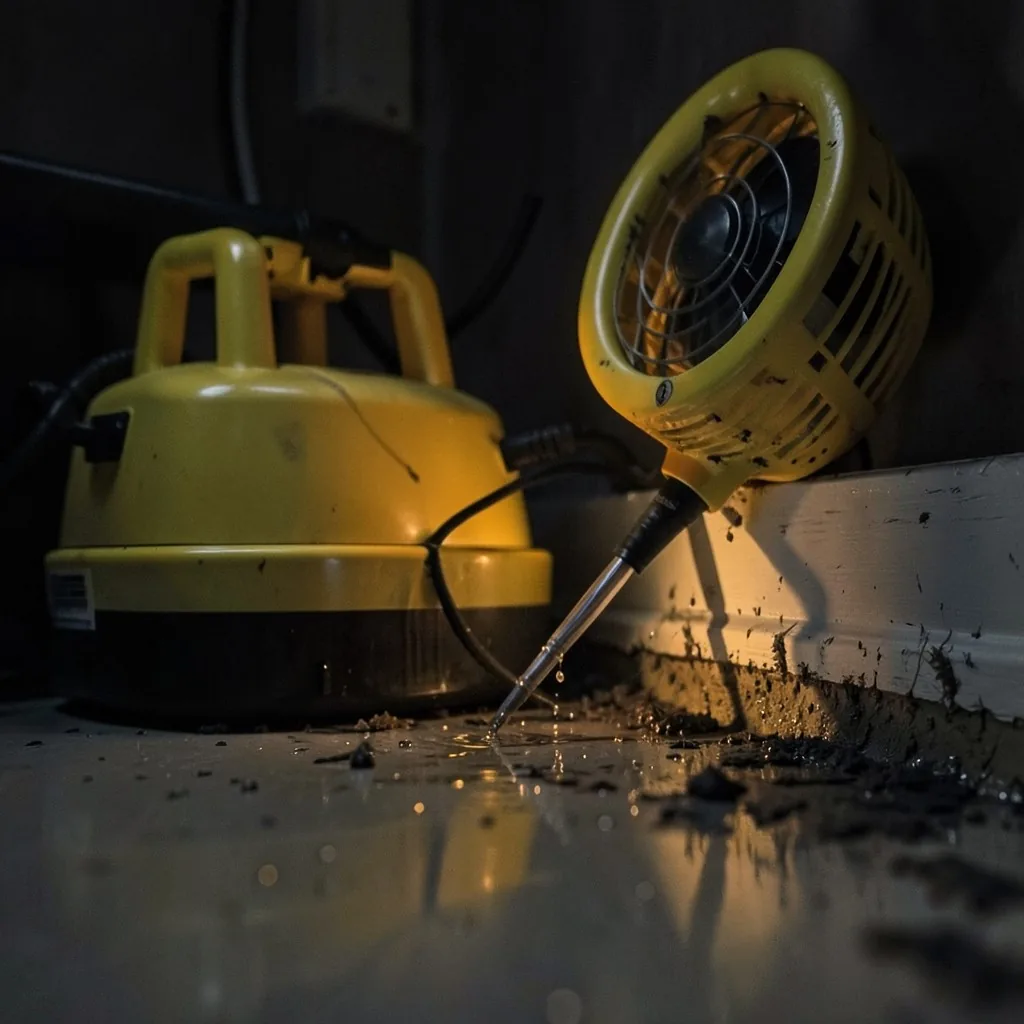
How do Barre crews handle it?
Class and load calculation
The water loss is classified by IICRC S500 class (1 through 4, based on how much material absorbed water and how deep it penetrated), and that class drives the airflow and dehumidification capacity the drying plan calls for.
Air mover placement
Axial and centrifugal air movers are positioned to sweep evaporated moisture off wet surfaces and into the airstream, angled and spaced to keep the whole affected area in continuous circulation rather than leaving dead zones.
Dehumidification and grain depression
A low-grain refrigerant or desiccant dehumidifier is sized to hold the grain depression the load calculation calls for — enough difference between the air's moisture content and the material's to keep evaporation moving without stalling.
Cavity injection
Wall cavities, subfloor voids, and other enclosed spaces that trap moisture get discrete injection ports feeding conditioned air directly into the cavity, since surface air movers alone can't reach what's sealed behind a finished wall.
Monitoring and plateau adjustment
Daily hygrometer and pin-meter readings are charted, and equipment placement is adjusted if a material's drying curve plateaus before reaching the target — a flat line on the drying chart means the plan needs to change, not just more days.
What should you do in the first 60 minutes?
- Make sure everyone is safely out of the affected rooms first.
- Turn off the water supply at the source if reaching it doesn’t put you in standing water.
- De-energize the area’s power before wading into anything wet.
- Photograph the damage and a rough inventory of affected belongings for your claim file.
- Start the mitigation call early — an adjuster will want to see a prompt response on record.
- Call for professional mitigation in Barre — the sooner a crew starts, the less is lost.
- Don’t step into standing water near an outlet, cord, or appliance — treat it as live until power is confirmed off.
- Don’t leave a wet-vac running on standing water without confirming the circuit is de-energized first.
- Don’t cycle the HVAC system — it pulls contaminated air through ductwork into dry rooms.
- Don’t haul soaked carpet or drywall to the curb before a contractor has logged it.
What drives water damage in Barre?
Water losses spike in deep winter, when a pipe can freeze, split, and flood a home before anyone is home to notice. The classic emergency here is the winter burst pipe — hundreds of gallons an hour, often discovered hours later, plus ice-dam roof leaks and spring-melt basement flooding. The most common triggers around Barre include frozen and burst pipes, ice dams and roof leaks, sump-pump failures and spring melt. Because the crews we route to work Barre and the northern freeze belt regularly, they know where the damage hides in local homes and check for it before it becomes a bigger, costlier problem. Barre thins into ranch lots and acreage parcels at its edges, where crews cover more ground between calls.
Beyond Barre itself, routing reaches Adamant, Montpelier, Calais, Cabot, Waterbury, Bristol, Cambridge, Charlotte, Belvidere Center, Burlington, Bakersfield, and Colchester and other Vermont towns nearby.
Why is every Barre job priced differently?
| Factor | Why it matters |
|---|---|
| IICRC S500 class of the water loss | A higher class means more material absorbed water more deeply, requiring greater airflow and dehumidification capacity. |
| Number of air movers and dehumidifiers required | Larger or more complex affected areas need more units running for the drying period. |
| Whether cavity injection drying is needed | Wall and subfloor cavities that trap moisture require additional injection ports and setup beyond surface air movers. |
| Days the equipment runs before reaching target grain depression | Each additional day of equipment operation and monitoring adds to the job. |
| Power and electrical capacity at the property | Running commercial-grade equipment sometimes requires generators or panel considerations that add setup time. |
| HEPA filtration needs | Water classes requiring airborne contaminant control add filtration equipment on top of standard drying gear. |
Contractors set their own rates and quote you directly — see our cost guides for detail. No pricing is shown here.
What equipment does the work actually require?
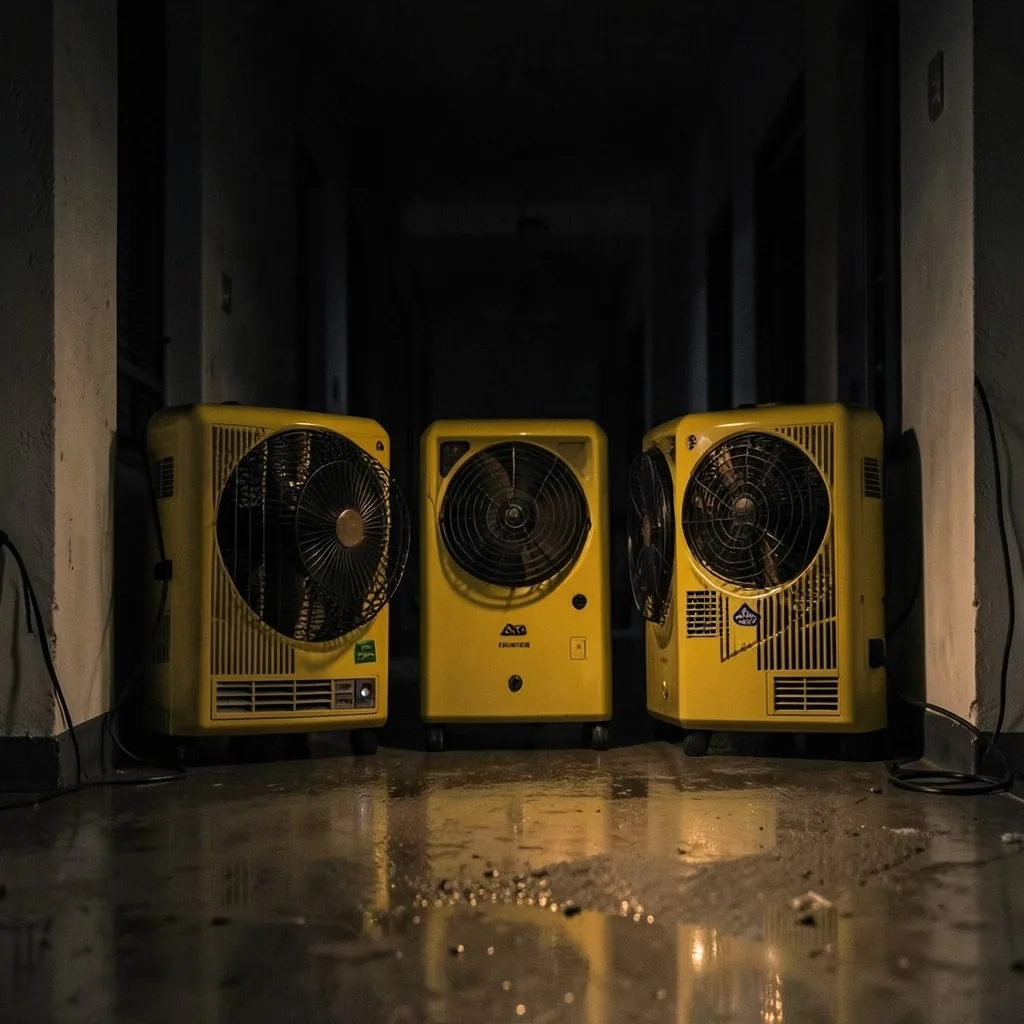
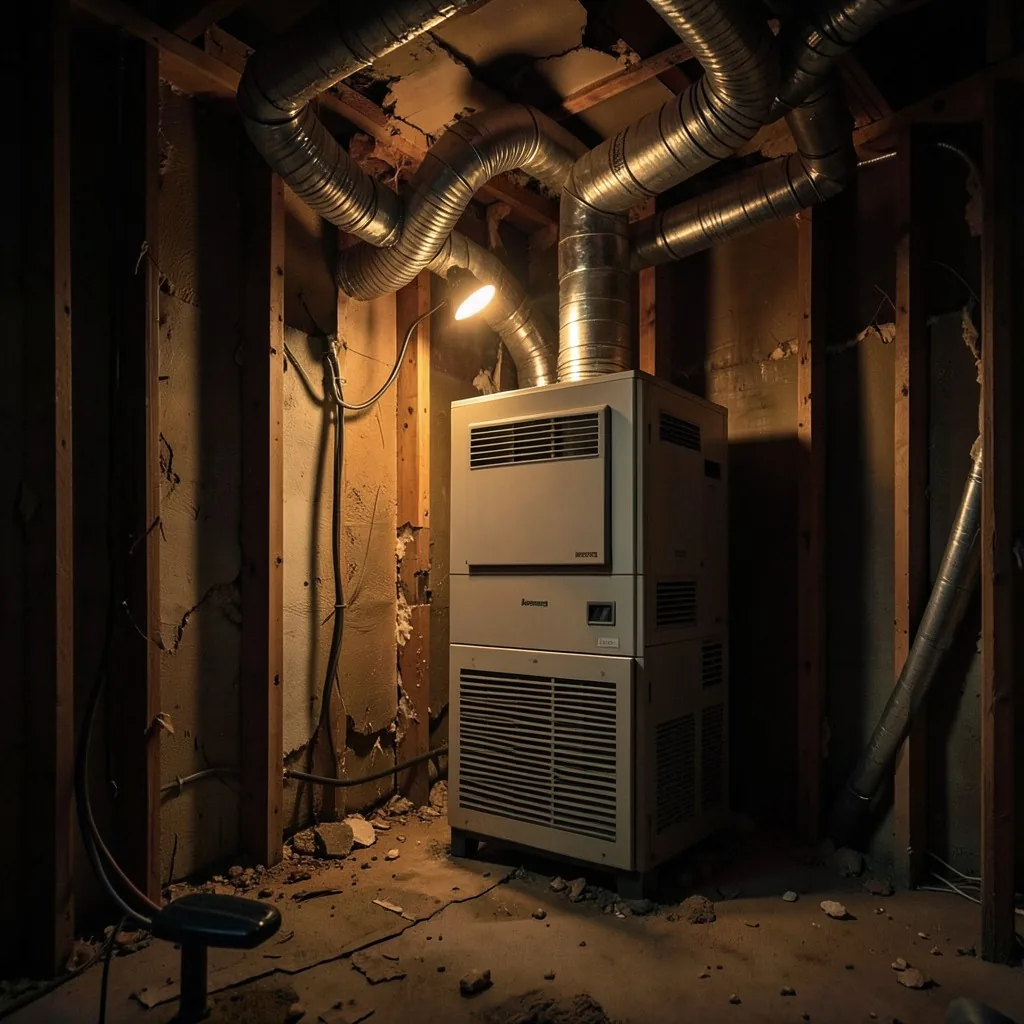
Salvage first, replace second — Barre crews clean and save what they can, and are clear about what has to go.
What standards do local crews work to?
Reaching what’s behind the wall
Injection ports and cavity drying reach saturated wall and subfloor spaces a surface fan alone can’t touch.
Capacity matched to the room
Dehumidification capacity is calculated against square footage and ceiling height, not guessed from a truck stock list.
Charted, not assumed
A technician checks and logs progress on a set schedule until the drying curve reaches its target.
Framing and subfloor included
The plan covers structural elements — framing, subfloor, sheathing — not only what’s visible from the doorway.
Water spreading right now?
A vetted local crew can be on the way. One call, free to get matched.
(877) 438-0796 →Whether a water loss is covered depends entirely on your policy and the circumstances of the loss — sudden and accidental events are commonly paid, while damage from neglect or a long-term leak is often excluded. A local contractor’s job is to document the extent of the damage, not to decide or negotiate coverage on your behalf. Nothing here is insurance advice; treat it as background only, and confirm the specifics with your carrier before assuming anything is or isn’t covered. See our restoration insurance claims guide for the full process.
Water Damage Restoration in Barre — FAQ
Real answers on matching, cost, insurance, and getting a crew on site in Barre. Don't see yours? The phone works from any page.
● (877) 438-0796How fast can a crew reach Barre?
This is emergency work, so dispatch to Barre runs day and night. One call connects you to a nearby, available contractor at no cost to you.
Do you cover all of Barre?
Barre falls inside the coverage area for water damage, fire & smoke damage, through independent, IICRC-standard contractors vetted before they take a call there. Barre thins into ranch lots and acreage parcels at its edges, where crews cover more ground between calls.
What causes most water damage in Barre?
In the northern freeze belt, the common triggers are frozen and burst pipes, ice dams and roof leaks, sump-pump failures and spring melt. The classic emergency here is the winter burst pipe — hundreds of gallons an hour, often discovered hours later, plus ice-dam roof leaks and spring-melt basement flooding. Barre shares a service radius with Websterville (2 mi) and South Barre (3 mi), so crews rotate through all of them.
How much will water damage restoration cost in Barre?
Every Barre contractor prices independently based on the size and category of the loss, so we don't publish rates here. Matching is free, and the estimate comes straight from the contractor who inspects the job. Our cost guides cover what actually drives the number. Postwar Barre construction typically means galvanized supply lines and slab-on-grade foundations, both of which change how a water loss gets traced.
How fast does a contractor typically respond to a water emergency?
Most emergency water losses get a response within hours of the call, since delay is the single biggest factor in how much damage spreads. Confirm the response window when you call, especially after hours or on weekends. Barre crews document the work with photos and readings for your records and your insurer.
Why does the 24 to 48 hour mark matter so much?
That's the general window in which mold can begin to establish on wet materials. It's why extraction and drying start immediately rather than being scheduled for later in the week. How fast a Barre crew reaches you depends mostly on how quickly you call.
How long does the drying process usually take?
It varies by how much water intruded and how long it sat, but most structural drying runs several days, with a technician visiting daily to log readings until the material reaches a documented dry standard and a final walkthrough closes it out. A local Barre, VT contractor handles this end to end — no distant call center.
Do the crews handle the rebuild too, or just cleanup?
Most Barre jobs go both ways: the same crew that stops the loss can also finish the rebuild, from framing and drywall through paint, so nothing gets handed off mid-project.
Is it really free to get matched?
Yes. Getting connected with a Barre restoration crew is free with no obligation. The contractor assesses the loss and gives you an estimate directly; the decision to proceed is entirely yours.
Are the Barre crews vetted?
We route to independent, IICRC-standard restoration contractors. Each is a separate business responsible for its own credentials, cover and workmanship — and you're free to verify those directly before any work begins.
Can one crew handle every kind of damage?
What's the difference between mitigation, remediation, restoration and repair?
Four words get used as if they mean the same thing, and they do not. Knowing which phase you are actually being quoted for is the difference between comparing two Barre estimates fairly and comparing a mitigation price against a full rebuild.
Inspection comes before all of it and is not the same as a quote. It establishes how far water damage actually reaches in a Barre property — usually with moisture meters, and sometimes thermal imaging — because the visible edge is rarely the real edge.
Mitigation is the emergency half — the work that stops the loss spreading. In Barre that means stopping the loss getting worse within hours, not days. Insurers generally expect it to begin immediately, because delay turns a contained loss into a larger one. Most policies ask you to take reasonable steps to limit damage, so this phase usually proceeds without waiting for approval.
Remediation — the word most people say as cleanup — covers removal, cleaning and drying. It ends when measurements confirm the conditions are back to normal, not when the room looks tidy. That distinction is worth holding a contractor to, because the two are easy to confuse on a walkthrough.
Restoration is the umbrella: everything from the first emergency call to a finished room. Used strictly it includes both of the phases above.
Repair means putting the building back: replacing what was removed and finishing it. It is scheduled after drying is verified, and it is the most common thing missing from a timeline you were given.
Pack-out is the removal of contents — furniture, documents, electronics, personal items — to be cleaned and stored off-site while the building work happens. It appears as its own line on a Barre estimate, and it is often the difference between a quote that looked cheap and one that looked expensive. Not every loss needs one.
Verification is the check at the end confirming the work actually met a standard — moisture readings, and for mold risk, an inspection. Ideally it is done by someone who did not perform the removal, because marking your own homework is the weak point. Keep whatever documentation comes out of it.
The practical use of this: when you compare two Barre quotes, make both state the same boundaries — where removal stops, whether drying is included, whether verification is included, and whether the rebuild is in the number. Two prices only mean something once they describe the same job, and the lower one is very often the one that quietly stops at mitigation. If a quote does not say, ask before you sign rather than after.
Read up on water & flood.
Outline what happened in Barre.
Send a short summary of the loss and an independent restoration contractor follows up. If the situation is unfolding right now, the phone is quicker.
- No charge to be introduced — and nothing is owed afterwards
- Screened crews working to recognized industry practice
- A single contractor — pricing comes straight from them
Someone who already covers your ZIP code, rather than a remote dispatcher.
Your Barre crew is one call away.
Free to get matched, no obligation — the crew gives you the estimate directly.